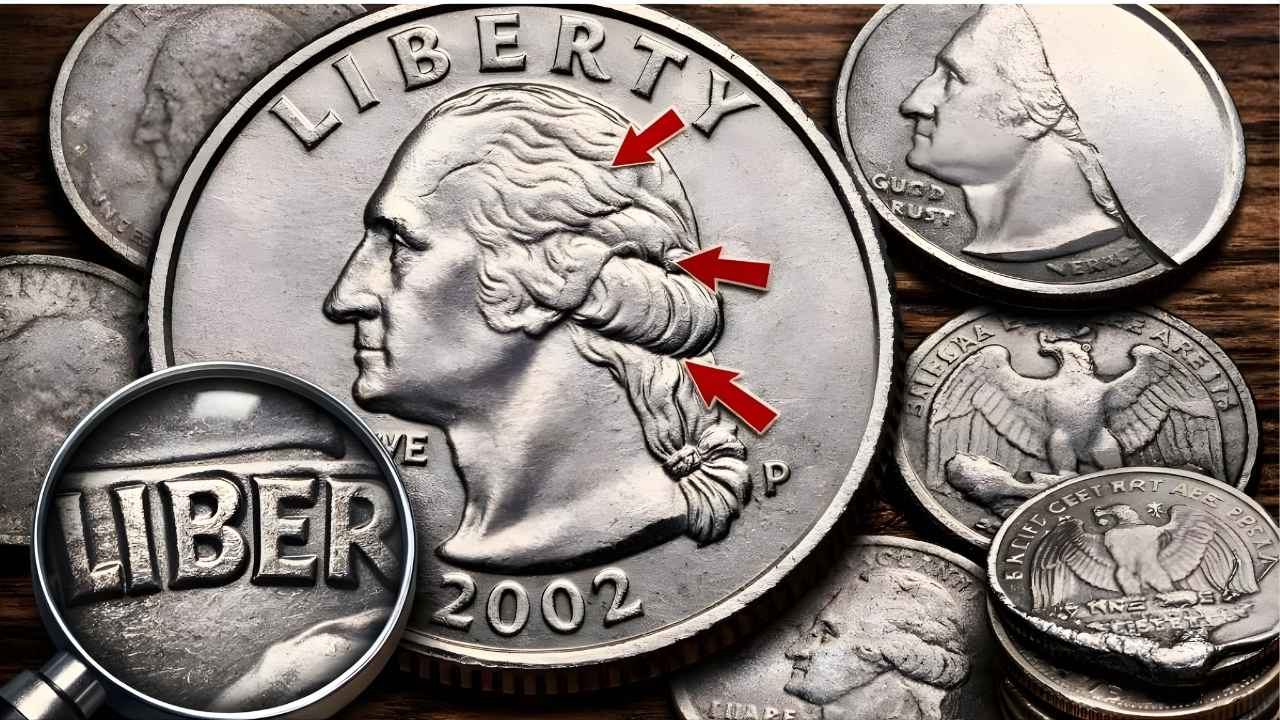
Rare 2002 Quarter Error Coins Value Guide: When it comes to coin collecting, error coins often command a special place in the hearts of collectors. These misprints and irregularities can turn an otherwise ordinary coin into something of immense value. Among the most sought-after error coins are the 2002 quarters, which have gained significant attention for their rare and valuable variants. Some of these coins are worth thousands of dollars, depending on the nature of the error, condition, and rarity.
In this guide, we’ll explore the world of rare 2002 quarter error coins. We’ll dive into what makes these quarters special, how to identify the most valuable error types, and how much they can be worth. Whether you’re an experienced numismatist or a newcomer to coin collecting, this article will provide you with all the essential information to identify valuable 2002 quarters in your collection.

The 2002 Quarter: A Brief Overview
Before diving into the error coins, it’s important to understand the 2002 quarter itself. The year 2002 marked a significant time in U.S. coinage, as it was part of the 50 State Quarters Program, which ran from 1999 to 2008. This program featured a series of quarters, each representing a different state, with unique designs on the reverse side of the coin.
The 2002 quarters were minted with designs representing the states of Tennessee, Ohio, Louisiana, and Indiana. The obverse of the coin remained the same as the standard Washington quarter, featuring George Washington’s portrait. The reverse featured a unique design for each state, created by the U.S. Mint and selected through public competitions.
While the 2002 quarter itself is common in circulation, certain error coins from that year have become incredibly rare and valuable. Collectors often seek out these errors, as they offer a glimpse into the quirks of coin production and the potential for unexpected profits.
Common 2002 Quarter Errors
There are several different types of error coins that can make a 2002 quarter exceptionally valuable. These errors occur during the minting process, when something goes wrong with the die, the striking, or other aspects of production. These mistakes can create unique and rare coins that are highly sought after in the numismatic world.

Some of the most common error types for 2002 quarters include:
Off-Center Strikes
An off-center strike occurs when the die does not fully align with the planchet (the metal disk that is struck to create a coin), resulting in a coin with part of its design missing. These coins often have an irregular shape, with portions of the obverse or reverse design cut off or displaced.
Off-center error coins are highly sought after by collectors because they are rare and visually striking. Depending on how far off-center the strike is, the coin’s value can vary. A 2002 quarter with a minor off-center strike may be worth a few hundred dollars, while one with a major off-center strike can fetch thousands at auction.
Double Struck Coins
A double-struck coin occurs when a coin is struck by the die more than once. In most cases, the second strike happens slightly out of alignment with the first, creating a ghost-like image of the design on the coin. This creates a striking effect, where the coin appears to have two impressions of the same design, but offset from one another.
Double-struck 2002 quarters are highly prized by collectors because they are rare and visually distinct. Depending on the severity of the double strike and the coin’s overall condition, a double-struck 2002 quarter can be worth anywhere from a few hundred to several thousand dollars.
Die Cracks
Die cracks occur when the minting die, which is used to strike the coin, develops a crack or break during production. This can result in coins with visible cracks in the design. While die cracks are not as dramatic as off-center or double-struck errors, they can still be valuable, especially if the crack is prominent and extends across the coin in a way that creates a unique and eye-catching effect.

Die crack errors are relatively common compared to other types of minting errors, but rare die cracks on 2002 quarters can still command a significant premium, particularly when the crack runs through an important feature of the design, such as Washington’s portrait or the state image on the reverse.
Clipped Planchets
Clipped planchets are a type of error where the metal blank that is struck to create a coin is cut improperly, resulting in a coin with a curved or clipped edge. This error occurs when the metal strip used to create the coin is not properly aligned, causing it to be miscut before it is struck with the die.
Clipped planchet errors are often quite noticeable, as they create a sharp, irregular edge around the coin. Because they are relatively rare, clipped planchet 2002 quarters are valuable among collectors. Depending on the extent of the clipping, these coins can be worth anywhere from a few hundred dollars to over a thousand.
Misaligned Dies
A misaligned die error occurs when the die that strikes the coin is not properly aligned with the planchet, resulting in a coin with an uneven or off-center design. The misalignment can cause part of the coin to be struck with more force than the rest, creating an uneven appearance.
Misaligned die errors on 2002 quarters are more common than some other types of errors, but they can still be valuable, especially if the misalignment is severe. These errors typically result in coins that are visually interesting, with portions of the design off-center or incomplete. Depending on the severity of the misalignment, these coins can be worth a few hundred to a few thousand dollars.
The 2002 Tennessee Quarter Error
One of the most well-known 2002 quarter errors comes from the Tennessee quarter, which was released as part of the 50 State Quarters Program. A small number of these quarters were struck with a major error in the design of the reverse side. The error occurred due to a misalignment in the die, causing part of the state’s design (the guitar) to be struck off-center.
These 2002 Tennessee quarters with the guitar design error are extremely rare and highly valuable. In some cases, these coins have sold for over $2,000, depending on the condition and severity of the error.
How to Identify Valuable 2002 Quarter Errors
If you’re interested in collecting rare 2002 quarter error coins, it’s essential to know how to identify these valuable variations. Here are a few tips on spotting the most common error types:
- Examine the Alignment: Check the coin for any signs of misalignment in the design. This includes off-center strikes, double strikes, and misaligned dies. A coin with any of these errors will often look unusual or distorted, with parts of the design shifted or incomplete.
- Look for Cracks: Inspect the coin for any visible cracks or breaks in the design, particularly on the obverse or reverse. Die cracks can often be faint, but if the crack runs through an important feature, it will be more noticeable.
- Check the Edge: A clipped planchet error will result in a coin with a jagged or curved edge. Look closely at the edge of the coin to see if it has any unusual features that might indicate a clipping error.
- Assess the Condition: The condition of the coin plays a significant role in its value. Coins in better condition, with fewer scratches and wear marks, will generally command higher prices than those in poor condition. Always check the overall appearance of the coin, including the clarity of the design and the level of wear.
- Consult a Professional: If you think you’ve found a valuable 2002 quarter error, it’s a good idea to consult a professional coin appraiser or numismatist. They can help verify the authenticity of the error and assess its potential value.
How Much Are 2002 Quarter Error Coins Worth?
The value of a 2002 quarter error coin can vary greatly depending on the type of error, the condition of the coin, and how rare the error is. Minor errors might be worth a few hundred dollars, while more significant errors, such as double strikes or rare misprints, can command thousands of dollars at auction.
For example, a 2002 Tennessee quarter with the guitar design error has been known to sell for over $2,000, while a 2002 quarter with an off-center strike can fetch anywhere from $100 to $1,000 or more, depending on the severity of the error.
Coins in uncirculated or near-mint condition are typically worth more than those with heavy wear, so always take care of your coins and keep them in a safe, protective environment.
Conclusion
The 2002 quarter is more than just a regular piece of U.S. currency. With its diverse designs representing the states, and its potential for rare minting errors, it has become a favorite among collectors. Error coins from this year are some of the most sought after, with some selling for thousands of dollars. Whether you’re a seasoned collector or just beginning to explore the world of error coins, understanding what makes these 2002 quarters valuable is essential.
By learning how to identify these rare error coins and understanding their potential worth, you can enhance your coin collection and possibly strike it rich with a valuable discovery. If you think you’ve found a rare 2002 quarter error, it might be time to have it appraised and start considering its potential market value.