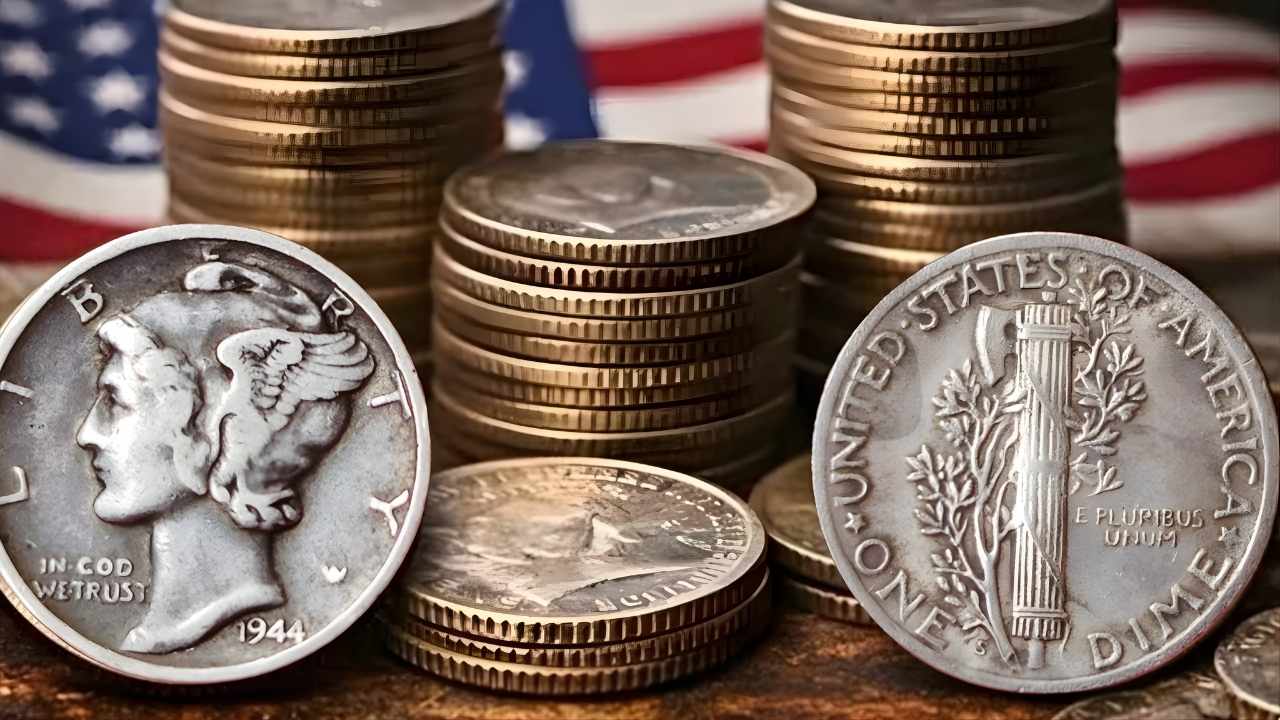
Top 7 Rare Mercury Dimes 2026: Mercury dimes, officially known as Winged Liberty Head dimes, remain one of the most popular and collectible coins among numismatists. Struck from 1916 to 1945 by the United States Mint, these ten cent pieces are prized for their artistic design, historical significance, and occasional rarity. In 2026, collectors are actively seeking the rarest Mercury dimes, with some fetching tens of thousands of dollars at auction.
Designed by Adolph A. Weinman, the obverse features Liberty wearing a winged cap, symbolizing freedom of thought, while the reverse depicts a fasces with an olive branch, symbolizing strength and peace. Despite the nickname Mercury dime, Liberty—not Mercury—graces the coin’s obverse.

The Mercury dime series saw over 27 years of production, and while many coins are common in circulated condition, certain dates, mint marks, and minting errors have become highly valuable. This guide explores the top 7 rare Mercury dimes in 2026, explaining why they are valuable, how to identify them, and what collectors should know to maximize their fortune-making potential.
Understanding What Makes Mercury Dimes Valuable
Not all Mercury dimes are worth more than ten cents. Several factors contribute to a coin’s value:

Rarity is the most obvious factor. Some dates were struck in low numbers, or most examples were lost or heavily circulated, making surviving coins scarce.
Mint errors add value. Common errors include doubled dies, repunched mint marks, and off-center strikes. Some error varieties are extremely rare and sought after.

Condition is critical. Coins are graded on the Sheldon scale from Poor-1 to Mint State 70. Higher grade coins command significant premiums.
Historical context matters. Coins produced during key periods, such as World War I, the Great Depression, or World War II, often have added interest for collectors.
Understanding these principles allows collectors to focus on the coins with the greatest potential value in 2026.
1916 D Mercury Dime
The 1916 D is widely regarded as the key date of the series. Produced at the Denver mint, only 264,000 coins were struck, making it extremely rare.
Even circulated examples command thousands of dollars, while uncirculated specimens have sold for over $100,000 at auction. Authentication is critical because counterfeit 1916 D Mercury dimes exist due to high demand.
Collectors should look for the D mint mark near the bottom left of the fasces on the reverse. Sharp details on the wings, fasces, and Liberty’s cap are key indicators of authenticity.

1921 Mercury Dime
The 1921 Mercury dime is notable for its low mintage and high relief design. Philadelphia minted only a small quantity, and the heavy wear from circulation makes high grade examples scarce.
Uncirculated 1921 dimes are extremely rare and have historically sold for tens of thousands of dollars. Sharp, well-defined design elements distinguish authentic coins from worn copies or restrikes.

1917 D Mercury Dime
The 1917 D is another key collector favorite. Denver minted relatively few, and many were lost to circulation.
Collectors prize well-preserved examples, especially those with clear details on the obverse wings and fasces on the reverse. Prices for high grade coins often exceed several thousand dollars.
1921 S Mercury Dime
San Francisco’s 1921 S Mercury dime is both rare and valuable. Many coins were poorly struck, and surviving examples in top condition are extremely scarce.
High grade specimens are particularly sought after, and collectors often compete aggressively to add these coins to registry sets. Auction prices for MS65 or higher coins are impressive.
1942/1 Mercury Dime (Overdate)
This overdate variety features a “1” from 1941 showing beneath the 2 of 1942. Minted in Philadelphia, it is a classic error coin that appeals to both Mercury dime collectors and error coin enthusiasts.
Although it is not as scarce as key dates like the 1916 D, well-preserved examples can fetch thousands of dollars in 2026.
1945 Mercury Dime with Doubled Die Reverse
The 1945 doubled die reverse Mercury dime is extremely rare. Doubling is visible on the words UNITED STATES OF AMERICA and E PLURIBUS UNUM on the reverse.
High grade examples are particularly desirable for error collectors. Only a few dozen coins are known in near mint state condition, making them some of the most sought-after 1940s Mercury dimes.
1936 Mercury Dime Low Mintage Varieties
The 1936 D and 1936 S are considered semi-key dates due to relatively low mintages compared to other 1930s issues. While not as rare as the 1916 D or 1921 coins, high grade examples are scarce and command premiums.
Collectors often seek these coins to complete type sets or mint mark sets. MS65 and above examples are particularly valuable.
Quick Reference Table of Top Mercury Dimes in 2026
| Coin | Key Feature | Approximate Value Range 2026 |
|---|---|---|
| 1916 D | Denver key date, low mintage | 25,000 to 150,000 dollars |
| 1921 | Low mintage, high relief | 10,000 to 50,000 dollars |
| 1917 D | Denver semi-key date | 3,000 to 15,000 dollars |
| 1921 S | San Francisco rare | 5,000 to 25,000 dollars |
| 1942/1 | Overdate error | 1,500 to 6,000 dollars |
| 1945 DDR | Doubled die reverse | 5,000 to 20,000 dollars |
| 1936 D/S | Low mintage semi-key | 500 to 3,000 dollars |
Values fluctuate depending on grading, market demand, and authentication. Coins in top grades command the highest premiums.
How to Identify Valuable Mercury Dimes
Examine the date and mint mark closely. Mint marks appear on the reverse near the bottom left of the fasces. Verify that numbers are not altered or artificially enhanced.
Look for doubling, overdates, or off-center strikes. These error coins are highly desirable.
Check the coin’s condition carefully. Coins with minimal wear, strong luster, and sharp details are worth significantly more.
Consult professional grading services when dealing with high value coins. Authentication reduces the risk of counterfeits.
Grading and Authentication
Professional grading services use the Sheldon scale to assign grades. Coins graded MS63 to MS70 are highly desirable for rare Mercury dimes.
Encapsulation protects coins from environmental damage, making them more appealing to buyers. High grade or error Mercury dimes should always be authenticated to maximize value.
Authentication certificates also help when selling through auction houses or online marketplaces.
Where to Find Rare Mercury Dimes
Many collectors still search for Mercury dimes in circulated coin rolls. Bank rolls and old collections occasionally yield key dates.
Estate sales, coin shows, and local coin shops are excellent sources for certified high grade examples. Auctions, both online and in person, offer opportunities to acquire rare coins from distant sellers.
Metal detecting in historically rich areas has occasionally produced Mercury dimes, although these finds are rare.
Investment Potential in 2026
Rare Mercury dimes are considered excellent long term investments. Key dates and high grade specimens have consistently increased in value over the decades.
Collectors should focus on high grade or error coins rather than common circulated examples. The 1916 D, 1921, and 1921 S remain the crown jewels of the series.
Diversifying your collection across several rare dates reduces risk and allows participation in different segments of the Mercury dime market.
Storing and Protecting Your Collection
Use coin holders, capsules, or flips to prevent scratches and environmental damage. Keep coins in a cool, dry place away from moisture and direct sunlight.
Avoid handling coins with bare fingers. Oils from the skin can cause corrosion or tarnish over time.
Document each coin with photographs and notes regarding mint mark, date, and grade. This helps track value and supports insurance or sales transactions.
Selling Rare Mercury Dimes
Auction houses often yield the highest prices for key dates and high grade specimens. Online marketplaces offer broader access but require careful presentation.
Certified coins generally sell faster and command higher premiums. Accurate descriptions, including mint marks, errors, and grade, are essential to attract serious buyers.
Timing the sale based on market trends can significantly influence final prices.
Common Mistakes New Collectors Make
One common mistake is assuming every Mercury dime is valuable. Most circulated coins are worth only face value unless they are key dates or exhibit mint errors.
Cleaning coins is another major mistake. Even light cleaning reduces collector value dramatically.
Failing to authenticate high value coins can lead to overpaying or disputes when selling.
Ignoring mint marks or misreading overdates can result in missing rare opportunities. Always study reference materials and compare suspect coins with verified examples.
The Historical and Artistic Appeal of Mercury Dimes
Mercury dimes are admired not only for their value but also for their artistry and historical significance. The Winged Liberty Head design captures the spirit of the early 20th century, symbolizing freedom and progress.
Collectors appreciate the connection to important periods in American history, including World War I, the Roaring Twenties, the Great Depression, and World War II.
The combination of historical context, artistic beauty, and rarity makes Mercury dimes a compelling series for both hobbyists and investors.
Final Thoughts on Collecting Mercury Dimes in 2026
Mercury dimes offer collectors an exciting opportunity to combine history, art, and investment potential. The top 7 rare Mercury dimes—1916 D, 1921, 1917 D, 1921 S, 1942/1 overdate, 1945 doubled die reverse, and 1936 D/S low mintage varieties—represent the most sought-after coins in 2026.
Building a collection requires knowledge, patience, and careful attention to mint marks, condition, and authenticity. Proper storage, professional grading, and smart acquisition strategies ensure that your Mercury dime collection can be both rewarding and potentially fortune-making.